
CELPIP Speaking Task 3: Describing a Scene Practice
Describe a picture so vividly that a listener who cannot see it understands exactly what is happening. Practise with 100 image prompts, real timers, AI scoring, and model answers.
100 Questions
Full task-type set
AI Scoring
CELPIP-aligned
Sample Answers
Basic · Good · Excellent
Timed Practice
30s prep · 60s speak
100 questions
Special Note: This practice interface is very similar to the actual CELPIP exam interface, helping you prepare with a realistic test experience.
Tip: Click the full screen icon in the top bar for a better, distraction free exam experience.
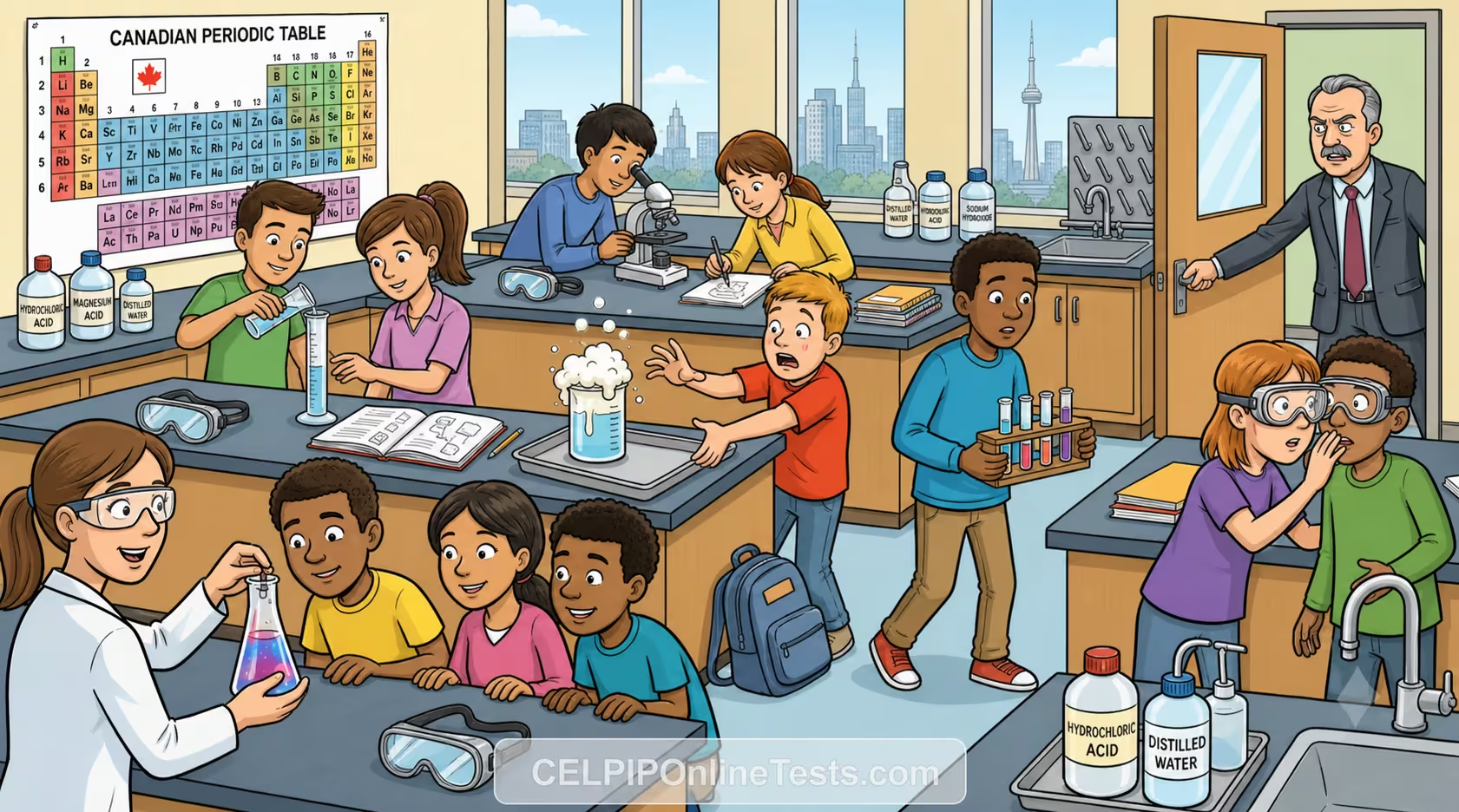
Describe some things that are happening in the picture below as well as you can. The person with whom you are speaking cannot see the picture.
When you're ready, start the 30-second preparation, then speak during the recording time. Your response is recorded for AI evaluation.
*NOTE: This sample test is not recording your response.
Sample Answer
This is a lively, slightly chaotic chemistry lab, and there's a lot happening at once. Front and centre, a teacher in safety glasses is demonstrating a colour-changing liquid while four students lean in, clearly fascinated. Just beside them, two lab partners are measuring water into a graduated cylinder, working carefully next to an open notebook. Toward the back, one student adjusts a microscope as a classmate sketches the specimen. What really draws my eye, though, is a beaker near one group that's foaming right over its rim — a startled student is already reaching for a tray. Adding to the tension, another student is carrying a rack of test tubes straight toward a backpack that's been left in the aisle, completely unaware of it. And at the doorway, the vice-principal is stepping in, eyeing a pair of students who are sharing one set of goggles. The lighting is bright and even, and the whole scene feels busy, hands-on, and on the edge of a small accident.
Why Practice Describing a Scene Questions?
Task 3 shows you a detailed picture and asks you to describe what is happening to someone who cannot see it. High scorers move systematically, foreground to background, or left to right, and use precise nouns, prepositions of place, and the present continuous to bring the scene alive.
The most common mistake is jumping randomly between details and running out of things to say. Practising with many scenes builds a reliable describing routine and a richer vocabulary for people, actions, and locations.
When you are ready for the full experience, take a complete speaking mock test under exam timing.
What is CELPIP Speaking Task 3?
Task 3, “Describing a Scene,” presents a busy illustration. You prepare for 30 seconds and speak for 60, describing the scene for a listener who cannot see it. Clarity, spatial organisation, and accurate vocabulary drive the score.
Frequently Asked Questions
Common questions about CELPIP Describing a Scene speaking practice.
Should I describe every single detail in the picture?
No, you cannot in 60 seconds. Cover the main action and the most important details in an organised order (for example front to back), using clear location language so the listener can picture it.
Which grammar is most useful for Task 3?
The present continuous (“a man is carrying…”) for ongoing actions, plus prepositions of place (in the corner, next to, behind) to position everything clearly.
Can I practice CELPIP speaking for free?
Yes — the first question on this page is completely free, including the full exam interface, AI scoring, and all three sample answers. The remaining questions are part of the Pro plan.
How is CELPIP Speaking scored?
Raters assess four dimensions — content and coherence, vocabulary, listenability, and task fulfillment — each mapped to a CELPIP level out of 12. The AI Sample Analysis on each question mirrors those four metrics.
What CELPIP level do I need for Canadian immigration?
Many Express Entry candidates target CELPIP level 9 or higher in each skill for maximum CRS points, while CLB 7 is a common minimum for several programs. Timed practice like this helps you close the gap before test day.