
CELPIP Speaking Task 4: Making Predictions Practice
Look at a scene and predict what will most probably happen next, using the visual clues to justify each guess. Practise with 100 prompts, real timers, AI scoring, and sample answers.
100 Questions
Full task-type set
AI Scoring
CELPIP-aligned
Sample Answers
Basic · Good · Excellent
Timed Practice
30s prep · 60s speak

100 questions
Special Note: This practice interface is very similar to the actual CELPIP exam interface, helping you prepare with a realistic test experience.
Tip: Click the full screen icon in the top bar for a better, distraction free exam experience.
In this picture, what do you think will most probably happen next?
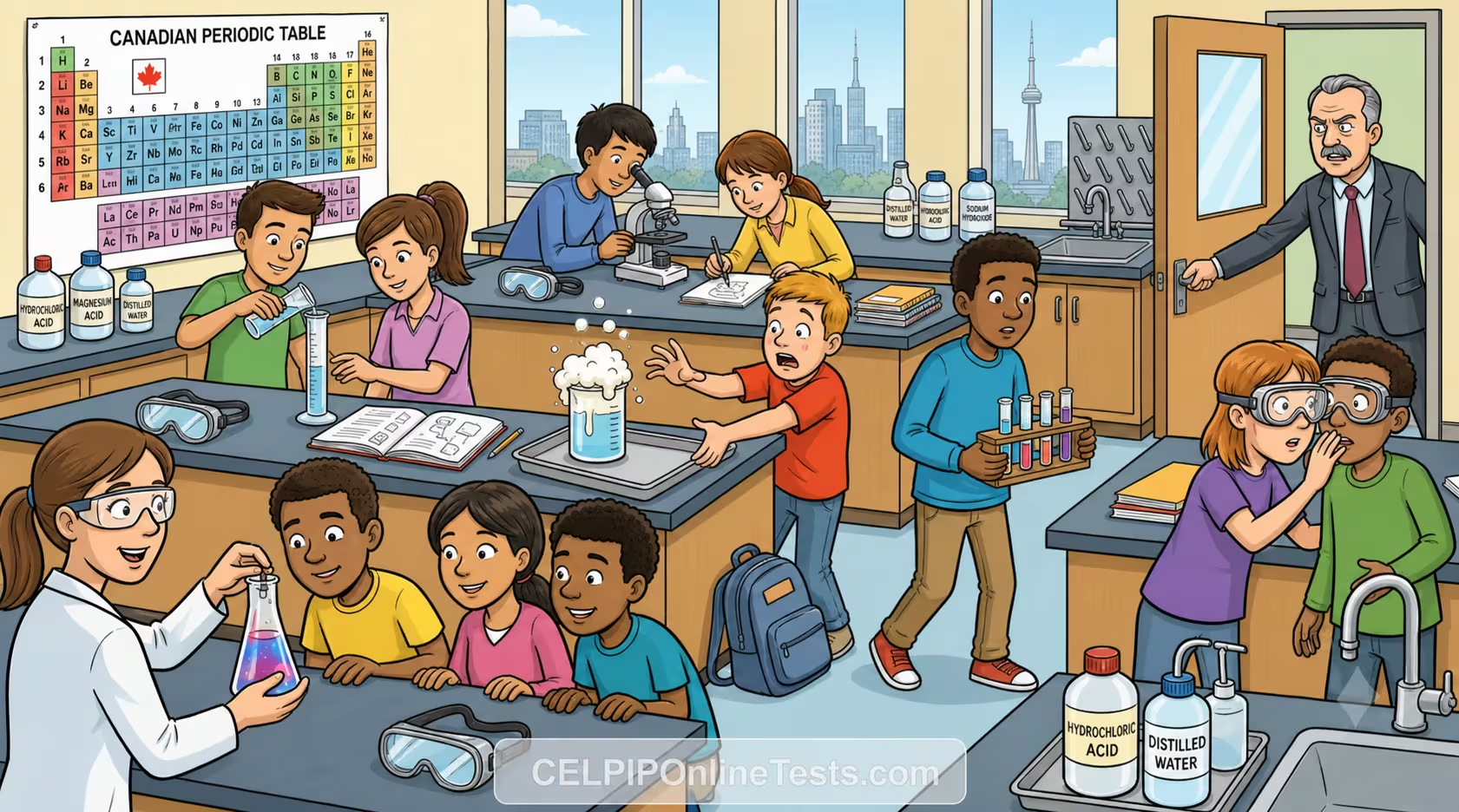
When you're ready, start the 30-second preparation, then speak during the recording time. Your response is recorded for AI evaluation.
*NOTE: This sample test is not recording your response.
Sample Answer
Looking at the visible clues, I can make a few confident predictions about what happens next. The most immediate is that overflowing beaker — the foam is already rising above the rim, so it's about to spill into the tray, and the startled student reaching for it will almost certainly shout for the teacher. A second, more worrying possibility is the student carrying the rack of test tubes: he's walking straight toward a backpack in the aisle without seeing it, so I'd predict he trips, and if he drops those tubes, it becomes a genuine safety hazard. And because the vice-principal is just entering and fixing his gaze on the two students sharing a single pair of goggles, I expect he'll cross the room and firmly remind them about proper lab safety. All together, the scene is one heartbeat away from turning chaotic, but the teacher and vice-principal will likely intervene before anything serious happens.
Why Practice Making Predictions Questions?
Task 4 uses the same style of picture as Task 3, but now you predict what will happen next. Strong responses make two or three predictions and, crucially, ground each one in a visible clue, “because the beaker is overflowing, the student will…”
Future forms carry this task: will, is going to, and probably/likely. Practising a range of scenes trains you to spot the clues quickly and to justify predictions rather than simply listing them.
When you are ready for the full experience, take a complete speaking mock test under exam timing.
What is CELPIP Speaking Task 4?
Task 4, “Making Predictions,” shows an about-to-happen scene. You prepare for 30 seconds and speak for 60, predicting the next events and supporting each prediction with evidence from the picture.
Frequently Asked Questions
Common questions about CELPIP Making Predictions speaking practice.
How many predictions should I make?
Two or three well-explained predictions are ideal. For each, name what will happen and point to the visual clue that makes it likely, justification is what raises the score.
Which grammar signals a prediction clearly?
Use future forms, “will,” “is going to”, softened with “probably,” “likely,” or “I expect,” which show you are reasoning rather than stating certainties.
Can I practice CELPIP speaking for free?
Yes — the first question on this page is completely free, including the full exam interface, AI scoring, and all three sample answers. The remaining questions are part of the Pro plan.
How is CELPIP Speaking scored?
Raters assess four dimensions — content and coherence, vocabulary, listenability, and task fulfillment — each mapped to a CELPIP level out of 12. The AI Sample Analysis on each question mirrors those four metrics.
What CELPIP level do I need for Canadian immigration?
Many Express Entry candidates target CELPIP level 9 or higher in each skill for maximum CRS points, while CLB 7 is a common minimum for several programs. Timed practice like this helps you close the gap before test day.