Prepare with Premium
Unlimited access to CELPIP practice, AI evaluation and detailed explanations.
- 100 CELPIP General mock tests
- 100 CELPIP General LS mock tests
- 100 tests for each skill (L/R/W/S)
- Unlimited AI Writing evaluation
- Unlimited AI Speaking evaluation
- Detailed answer explanations
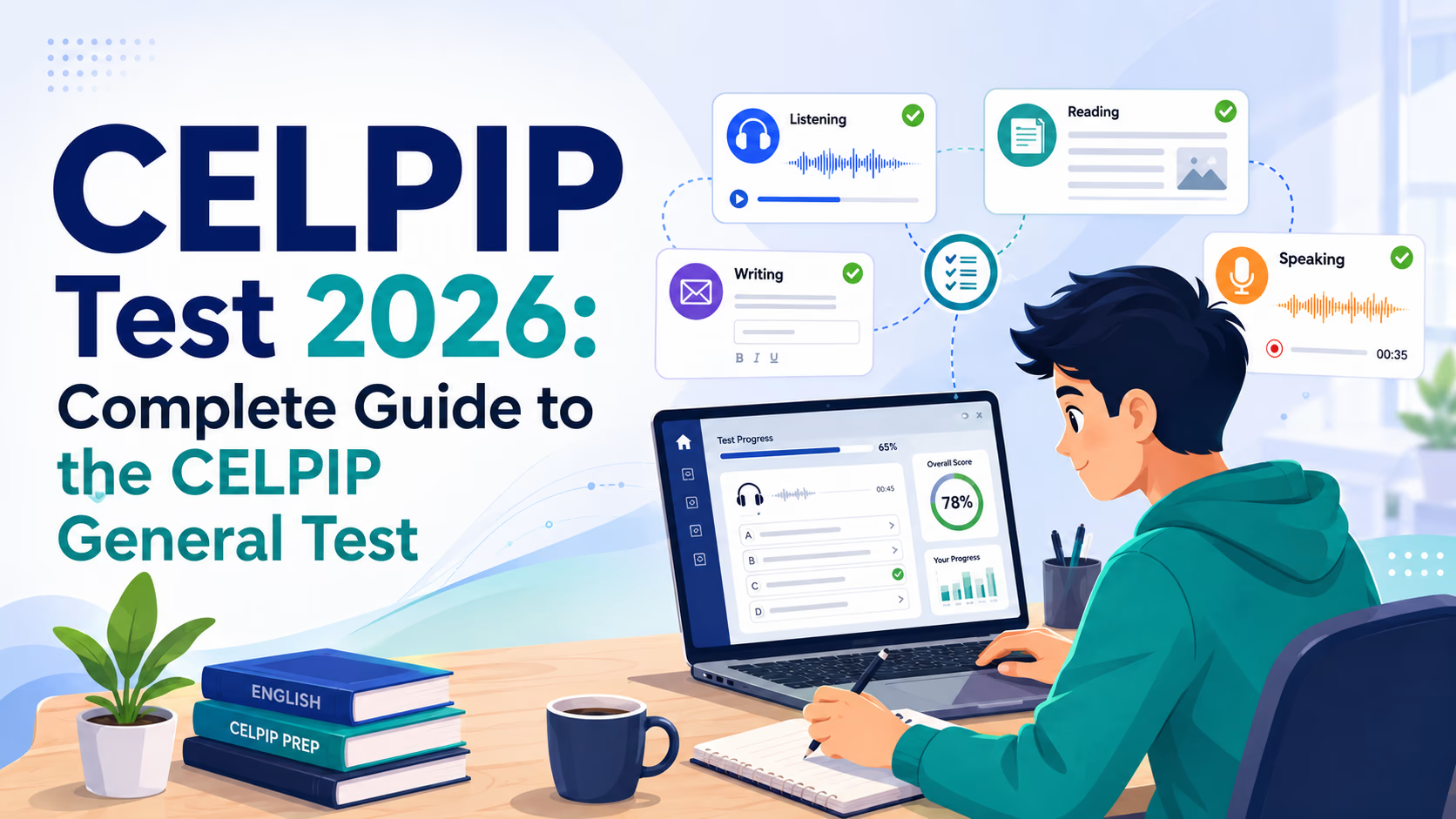
The CELPIP test is one of the English exams the Canadian government accepts for immigration, and a lot of people find it familiar to sit. It is done fully on a computer, it uses Canadian accents and everyday situations, and all four skills are tested in one visit. If you are just starting to look into the exam, start here. This guide explains what CELPIP is, who takes it, how each part works, how your score turns into a CLB level, and how to plan your study time so your score actually goes up. When you want to stop reading and start practising, open a free CELPIP practice test.
CELPIP stands for the Canadian English Language Proficiency Index Program. It is made and run in Canada, and it tests the everyday English you use at work, in your community, and in daily life. It does not test academic English. That is the main reason people who live, work, or plan to settle in Canada often feel more at home with CELPIP than with academic-style exams.
Who the CELPIP test is for
Most people take CELPIP for one of a few reasons. The biggest group is people applying to immigrate, who need to prove their English to Immigration, Refugees and Citizenship Canada (IRCC). CELPIP results are accepted for Express Entry (including the Federal Skilled Worker and Canadian Experience Class streams), most Provincial Nominee Programs, and Canadian citizenship. The next group is professionals such as nurses, teachers, engineers, and accountants, whose licensing body asks for proof of English. A third group just needs a trusted English certificate for study, work, or personal goals.
- Express Entry and PNP applicants who need all four skills scored.
- Citizenship applicants who only need Listening and Speaking.
- Licensed professionals meeting a regulator's English requirement.
- Anyone who wants a Canadian English certificate that is valid for two years.
CELPIP General vs CELPIP General LS
There are two versions of the exam, and picking the right one matters because they are used for different things. The CELPIP General test covers all four skills: Listening, Reading, Writing, and Speaking. This is the version you need for permanent residence and most professional licences. The CELPIP General LS test covers only Listening and Speaking. It is accepted for Canadian citizenship and for a few designations that check just those two skills.
The simple rule is this. If your goal is permanent residence, you almost certainly need CELPIP General. If your goal is citizenship, CELPIP General LS is usually enough, and it is shorter and cheaper. Always double check the exact requirement with the program you are applying to before you book. When you want to run through either version from start to finish, use the full CELPIP General mock tests or the shorter CELPIP General LS mock tests.
CELPIP General test structure
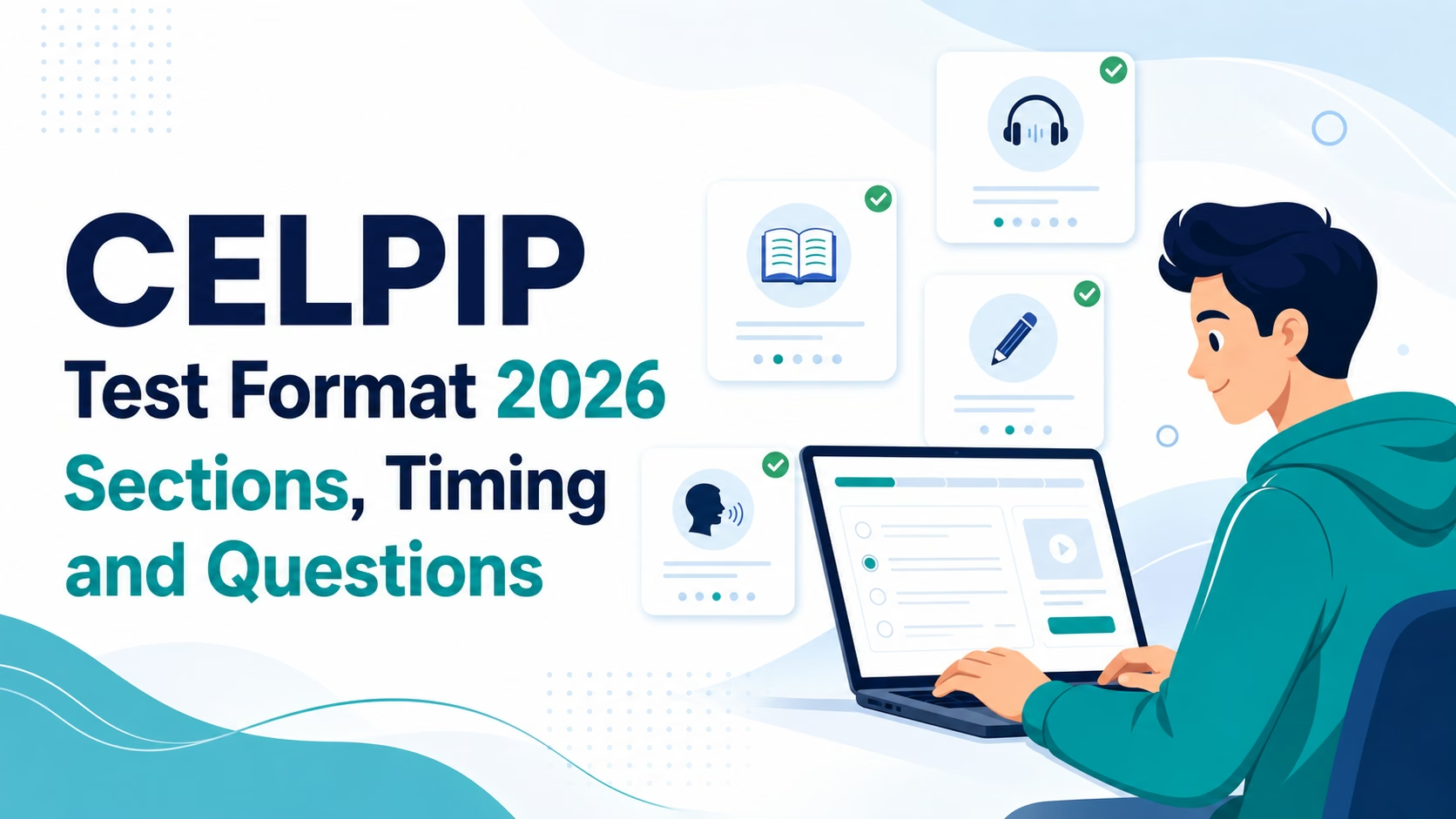
You take the CELPIP General test on a computer in one sitting that lasts about three hours. All four skills come one after another in a fixed order: Listening, then Reading, then Writing, then Speaking. There is no live examiner. Even Speaking is recorded through a headset, so everyone gets the same standard experience.
| Section | Time | Questions / tasks |
|---|---|---|
| Listening | 47 to 55 min | ~38 questions across 6 parts |
| Reading | 55 to 60 min | ~38 questions across 4 parts |
| Writing | 53 to 60 min | 2 tasks (email + survey response) |
| Speaking | 15 to 20 min | 8 short recorded tasks |
Question counts and timings can change a little from one test form to another, and some sections start with a short practice task that is not scored so you can settle in. Use the numbers above as a solid guide, not an exact promise.
Test timing and what test day feels like
On test day you arrive early, sign in, show your ID, and sit at a workstation with a headset. Once the test starts, it keeps moving. Each section has its own timer on screen, and the clock does not stop for you inside a section. The Listening audio plays only once, so you cannot rewind. Writing and Speaking tasks each have their own countdown for planning and answering. It is one long session with very few breaks, so your energy matters. Speaking comes last, when you are already tired, and that is exactly why full length practice helps so much.
CELPIP is offered at test centres across Canada and in other countries. Check the official booking page for the current locations, dates and identification rules before you book.
A closer look at each section
CELPIP Listening
Listening uses real Canadian audio: solving a problem in a conversation, everyday chat, an information talk, a news item, a discussion, and a set of opinions. You listen once, jot down light notes, and answer multiple choice questions. The test is checking how well you understand under time pressure, not how much you can memorise, so aim to catch the main idea and a few key details instead of writing everything down. Build this skill with the CELPIP Listening practice tests.
CELPIP Reading
Reading starts with an email or letter where you complete a reply, then reading and using details from a diagram, then reading for information in a longer passage, and finally reading opinions in an article. CELPIP loves to reword ideas, so the habit that pays off is matching meaning, not matching the same words. Sharpen it with the CELPIP Reading practice tests.
CELPIP Writing
Writing has two tasks. Task 1 is an email of 150 to 200 words that responds to a situation with three points to cover, and your tone (formal, semi formal, or informal) counts toward the score. Task 2 gives you a survey scenario where you pick an option and explain your choice in 150 to 200 words. Both reward clear structure and real detail. Practise with the CELPIP Writing practice tests and lean on proven writing templates so a reliable shape becomes second nature.
CELPIP Speaking
Speaking is eight short tasks recorded into your headset. They cover things like giving advice, describing a personal experience, describing a scene, making predictions, comparing and persuading, and handling a tricky situation. Each task gives you a little planning time and a set recording window. The scoring is a rubric applied later, not a person judging you in the room, so speaking clearly and staying on topic beats trying to sound fancy. Learn every prompt type in our CELPIP Speaking test guide, then rehearse with the CELPIP Speaking practice tests.
Take a full CELPIP mock test
Put your preparation to the test with an exam-style CELPIP mock and get an honest baseline across all four skills.
CELPIP scoring and CLB levels
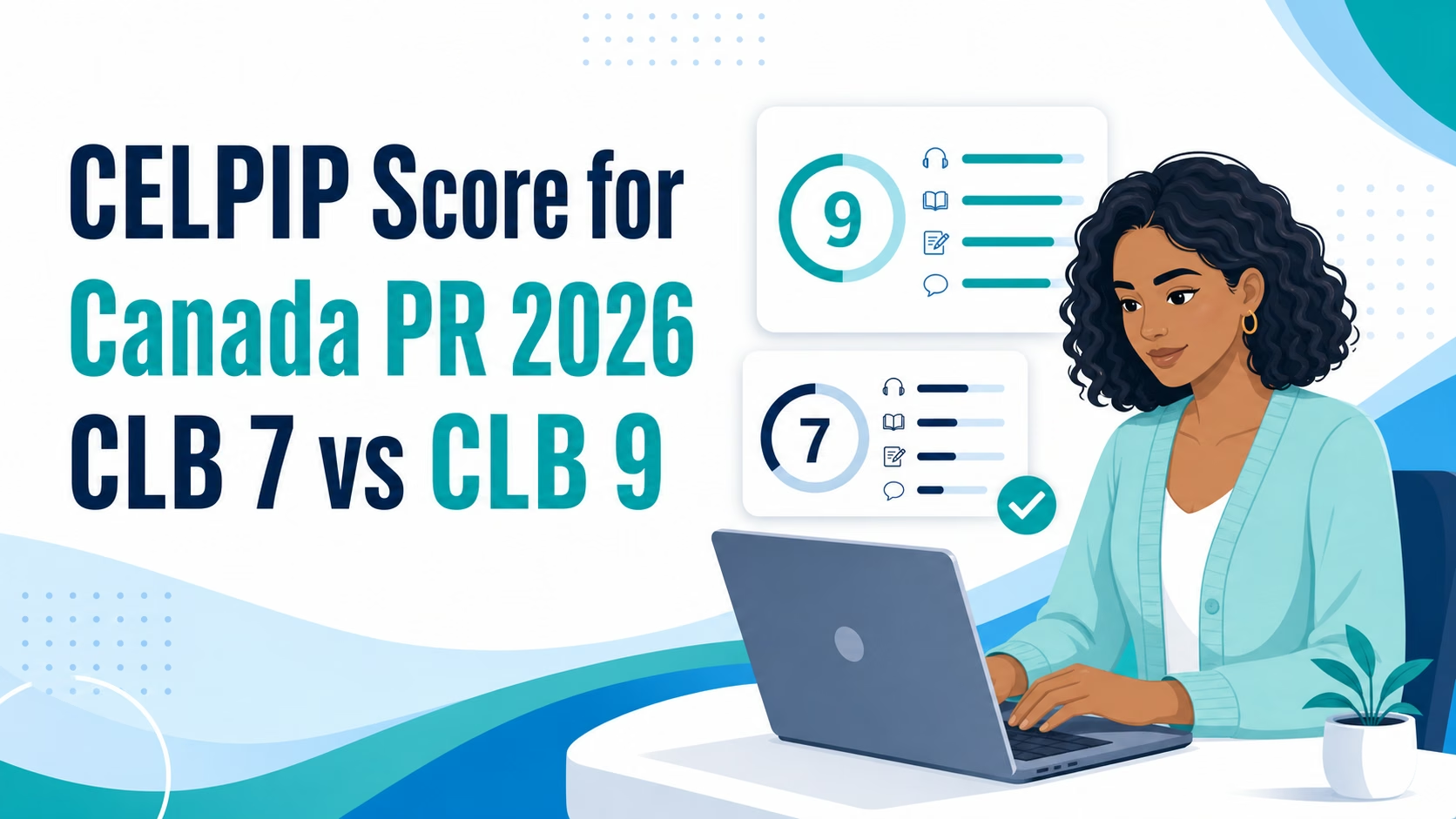
CELPIP gives you a CELPIP Level from 1 to 12 for each of the four skills, plus 'M' for minimal ability. This scale matters for immigration because it lines up directly with the Canadian Language Benchmark (CLB). A CELPIP Level 9 in Speaking is the same as CLB 9 in Speaking, a Level 7 is CLB 7, and so on. There is no extra conversion, so it is easy to read your CELPIP result against what IRCC asks for.
- CLB 7 is a common minimum for the Express Entry Federal Skilled Worker stream.
- CLB 9 unlocks the strongest language points and Canadian experience bonuses.
- Your profile is judged by your weakest skill, so balance beats one high score.
- Each skill is scored on its own, so you can be CLB 10 in Listening and CLB 7 in Writing.
Since your points and eligibility depend on hitting a specific CLB level, it helps to know where you stand before you book. Use the CELPIP score calculator to turn your practice results into CLB levels and see which skill is holding your profile back.
How CELPIP results work
Results are usually available in two to four business days after your test date. You get them in your online CELPIP account, where you can see your level for each skill and download an official score report. For immigration, CELPIP results are generally valid for two years. If one skill lets you down, you may not have to redo the whole exam, but the rules on retaking a single section can change, so check the current policy on the official CELPIP results page before you count on it.
How to prepare for the CELPIP test
Good prep is less about piling on hours and more about closing the gaps that are actually costing you. Start with one full, timed practice test so you get an honest baseline for each skill. That baseline shows you where to put your energy. There is no point drilling Reading if Writing is the skill keeping you below your target CLB.
- Start with a diagnosis: take one timed full mock test and score every skill.
- Work on your weakest skill first, since your lowest level sets your profile.
- Learn the format of each task so nothing on test day surprises you.
- Practise with real time limits, because untimed practice hides your true pace.
- Review every mistake, name why it happened, then redo similar questions.
Focus your tips skill by skill: note taking for Listening, scanning statement by statement for Reading, structured emails for Writing, and using your planning time well for Speaking. Short, steady sessions backed by regular vocabulary building will lift your score faster than the odd marathon day.
How many practice tests should you take?
There is no magic number, but a good rhythm is to put full mocks at the start and end of your prep and fill the middle with focused sectional practice. Take a full mock at the start to set your baseline, spend a few weeks working on weak skills, then take another full mock to check your progress. Do one more close to test day to rehearse pacing and stamina. For most people that works out to three to five full mocks plus a steady stream of shorter drills.
How you review matters far more than how many tests you take. One mock you go through carefully, working out why each wrong answer was wrong and what you will do differently, is worth more than five you rush. Space your mocks out so each one shows real improvement and not just a memory of the last set. Browse the full CELPIP practice test library to mix shorter and full length work.
Common CELPIP preparation mistakes
- Practising without a timer, then getting caught out by the clock on test day.
- Chasing a higher score in a strong skill while ignoring the weak one that caps your CLB.
- Reading for the same words instead of matching the reworded idea.
- Writing well over or under 150 to 200 words and losing task marks.
- Scripting Speaking answers word for word, which sounds robotic and wastes prep time.
- Skipping full length runs, so Speaking always arrives when your focus is gone.
- Not reviewing mistakes, so the same errors keep coming back.
CELPIP vs IELTS: a quick comparison
Both CELPIP and IELTS (General Training) are accepted by IRCC, so the choice comes down to fit. CELPIP is fully on a computer, uses Canadian English, and records Speaking through a headset, which helps if a live interview makes you nervous or you type faster than you write by hand. IELTS uses a face to face Speaking interview and offers both paper and computer formats, which some people prefer. The scoring is different too. CELPIP levels line up straight with CLB, while IELTS band scores are converted to CLB by IRCC. If you are happy typing and want one steady, all computer experience in a Canadian setting, CELPIP is often the more natural pick. In the end, the best test is the one your practice scores are highest on.
Ready to see where you stand?
The quickest way to understand the CELPIP test is to take one. Start free, get an honest baseline for every skill, then build your plan around the section that needs it most.